

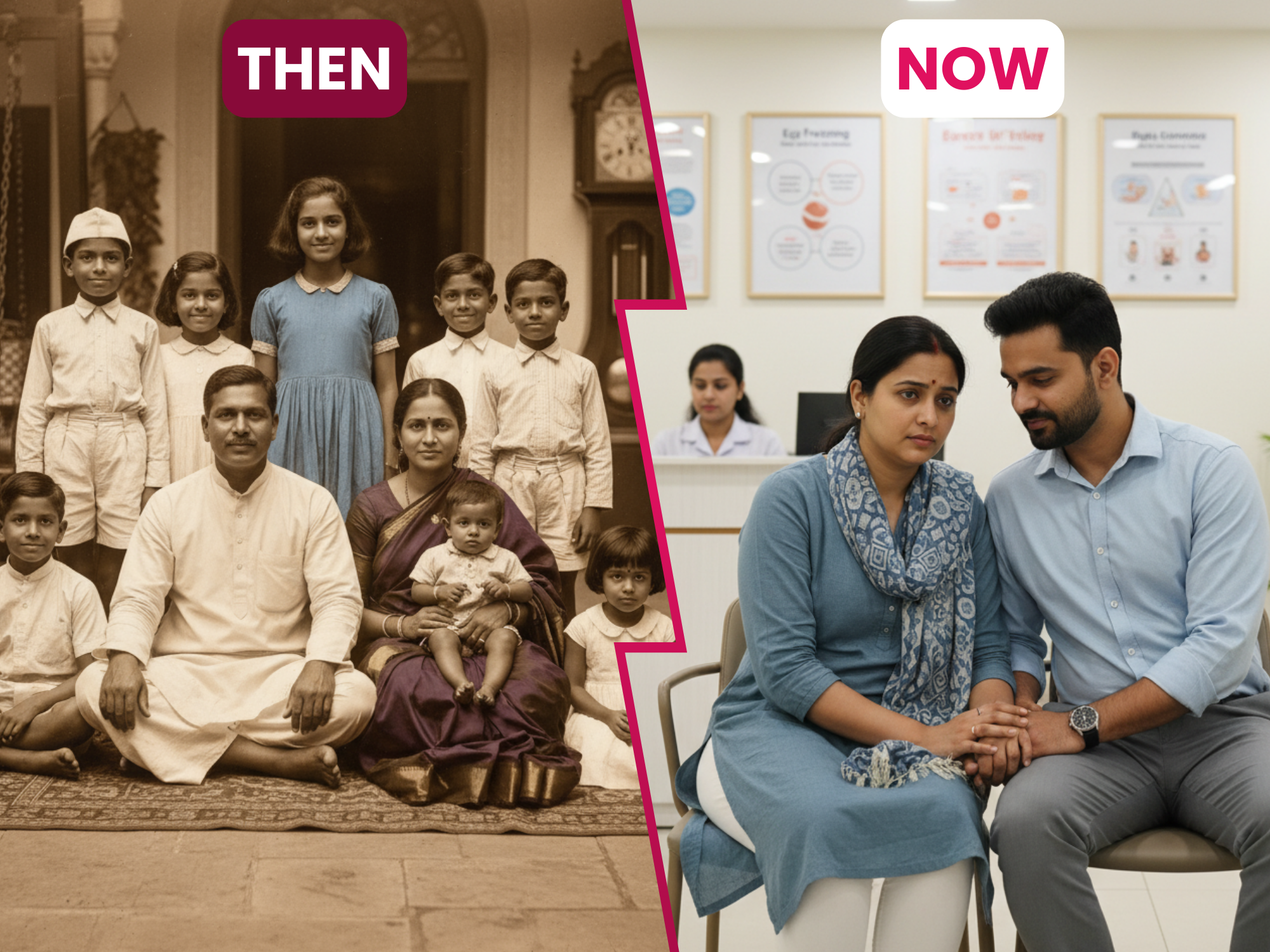
Not too long ago, it was common to hear our grandparents talk about families with six, seven, or even nine children. Large families were a symbol of prosperity, security, and tradition in India. Fast forward to today, many couples are struggling to have even one child. Infertility has quietly become a national crisis.
This blog explores why fertility rates have dropped so sharply, what it means for India’s future, and how couples can protect their reproductive health.
The Numbers Tell the Story
In the 1960s, the average Indian woman had 5.9 children (World Bank Data).
By 2020, this dropped to just 2.0 children.
Today, in urban cities like Mumbai, Bengaluru, and Chennai, fertility rates are even lower at 1.5 or less, below the replacement level of 2.1 needed to maintain population.
According to the Indian Society for Assisted Reproduction (ISAR), nearly 27.5 million couples in India are infertile.
What was once a country of big families is now a country of fertility clinics.
Why the Sudden Decline?
The drop in fertility is not just a matter of “choice.” It is also about health and lifestyle changes.
- Lifestyle Diseases
Diabetes, obesity, and hypertension are rising in young adults. These conditions directly reduce sperm count, egg quality, and overall fertility.
- Stress and Late Marriages
Career-first lifestyles mean couples marry in their late 30s. Fertility naturally declines with age, especially for women after 35.
- Environmental Factors
Exposure to plastics, pesticides, and pollution has been proven to disrupt hormones. Studies show sperm counts in Indian men have declined by 30% in the past two decades.
- Diet & Modern Habits
Fast food, alcohol, smoking, and lack of nutrient-rich diets have weakened reproductive health. Poor sleep and excessive screen time further reduce libido and testosterone.
The Human Cost
Infertility isn’t just about numbers. It’s about emotions:
- Couples face shame and stigma in society.
- Women are often unfairly blamed, even when male infertility accounts for 50% of cases.
- The rising demand for IVF and other fertility treatments is financially draining, with each IVF cycle costing ₹1.5–2.5 lakhs and success rates of only 30–40%.
- This growing crisis is breaking dreams silently inside countless households.
Why We Can’t Ignore This
A country that once worried about overpopulation is now staring at an underpopulation problem.
Fewer children means a shrinking workforce in the future, and a heavier burden on younger generations to care for an ageing population.
On a personal level, couples who delay seeking help often lose their fertile years.
The Way Forward
The first step is awareness. Infertility is not rare. It’s common, and in many cases, preventable.
- Early Action
Couples should not delay seeking medical advice if they struggle to conceive for more than a year.
Men should also get tested, not just women.
- Natural Solutions First
Food can heal. Nutrient-rich diets that include zinc, selenium, folate, vitamin D, and antioxidants can boost fertility naturally.
Exercise, stress management, and detoxifying the body from toxins play a critical role.
- Open Conversations
Breaking taboos around infertility will allow couples to seek help earlier and more confidently.
Daddy-Mummy.com: A Natural Approach At Daddy-Mummy.com, we believe every couple deserves the joy of parenthood without fear or stigma.
That’s why our recipe eBooks focus on:
Fertility for Men – boosting sperm count, motility, and quality.
Fertility for Women – improving egg health and balancing hormones.
Traditional remedies – Indian superfoods and time-tested recipes designed for modern couples.
All recipes are science-backed, natural, and tailored for Indian kitchens. No chemicals, no side effects, just real food solutions for real problems.
Final Word
From nine kids to none, India’s fertility story is changing faster than most realize. But infertility is not destiny. It is a wake-up call.
If we want to protect our families, marriages, and future generations, we need to take sexual and reproductive health seriously. Awareness, lifestyle change, and natural remedies are the first steps.
Because the truth is simple: the ability to create life is the foundation of life itself.